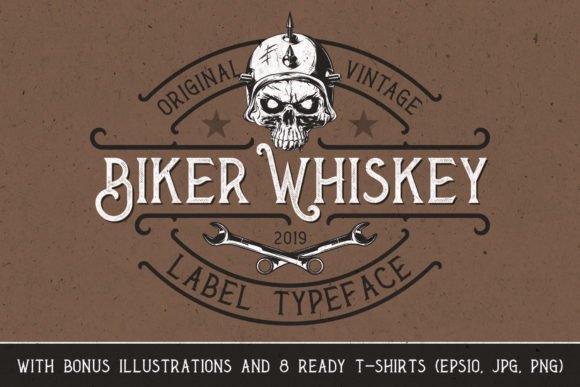
Biker Whiskey: Integrating a Vintage Display Font into Modern Creative Workflows
In the landscape of digital asset management and graphic design, selecting the right typography is often the difference between a generic output and a memorable brand identity. Biker Whiskey stands out not merely as a typeface but as a distinct visual element that carries significant weight in retro-themed projects. This vintage and unique display font offers a rugged aesthetic that resonates deeply with audiences who appreciate authenticity and nostalgia. For professionals, creators, and small business owners looking to elevate their visual communication, understanding how to integrate this specific font into a coherent workflow is essential for achieving high-quality results.
The primary value of Biker Whiskey lies in its ability to evoke a specific mood instantly. When applied correctly, it transforms standard layouts into immersive experiences suitable for posters, t-shirts, labels, logos, and packaging. However, successful implementation requires more than just dragging and dropping the font file into a design software. It demands a strategic approach to planning, compatibility checks, and quality control to ensure the final product meets professional standards while maintaining the font's unique character.
Defining the Role of Biker Whiskey in Design Planning
Before any creative execution begins, it is crucial to define where Biker Whiskey fits within the broader project scope. Unlike body text fonts designed for readability over long passages, this is a display font intended for impact. In a typical workflow, this distinction dictates that the font should be reserved for headlines, key messaging, or branding elements rather than supporting text. Attempting to use it for paragraphs will compromise legibility and dilute the visual hierarchy of the piece.
When initiating a project, whether it is launching a new craft beer label or designing merchandise for an event, the decision to use Biker Whiskey should be made during the conceptual phase. Ask yourself if the target audience responds to vintage aesthetics. If the goal is to convey ruggedness, heritage, or a handcrafted feel, this font becomes a central pillar of the strategy. By identifying its role early, designers can avoid the common pitfall of forcing a stylistic choice that does not align with the project's core message.
Integration into the planning process also involves gathering assets that complement the font's style. A vintage display font rarely works in isolation; it thrives when paired with imagery and textures that reinforce its era. During the preparation stage, collect photographs, illustrations, or vector graphics that share a similar grainy, worn, or high-contrast quality. This ensures that the final composition feels cohesive rather than disjointed.
Compatibility and Technical Preparation
One of the most overlooked aspects of using specialized fonts like Biker Whiskey is technical compatibility. Before diving into the creative work, verify that the font files are compatible with your preferred design software and the intended output medium. While modern operating systems handle most OpenType and TrueType formats seamlessly, older printing presses or specific web environments may require conversion or embedding adjustments.
For professionals working on physical products such as t-shirts or labels, licensing and file formats are critical. Ensure you have the appropriate commercial license if the font will be used for client work or mass-produced items. Additionally, check the resolution requirements for the final output. Vectorizing the text, if possible, provides the best scalability for large-format prints like posters, whereas rasterization must be handled at a sufficiently high DPI to prevent pixelation. Taking these steps during the preparation phase prevents costly rework later in the production cycle.
Furthermore, consider the color palette. The bold, distinctive strokes of Biker Whiskey interact differently with various background colors. Test the font against potential backgrounds early to ensure sufficient contrast. A dark, gritty texture might swallow lighter ink, while a bright white background could make the heavy serifs look too stark. This trial-and-error process is a vital part of the quality control routine.
Executing the Design: From Concept to Final Asset
Once the planning and technical checks are complete, the focus shifts to execution. This is where the workflow becomes practical and hands-on. When applying Biker Whiskey to a logo or label, pay close attention to kerning and spacing. Display fonts often have wide default spacing to accommodate decorative elements, which can lead to awkward gaps when letters are placed closely together. Manually adjusting tracking and kerning pairs ensures the text reads smoothly and maintains the intended visual weight.
In the context of creating marketing materials, such as social media graphics or email headers, efficiency is key. Use Biker Whiskey to create a consistent visual anchor across different platforms. If a brand uses this font for its main logo, extending it to Instagram story templates or website banners creates a unified identity. However, consistency does not mean uniformity; vary the size and application to create dynamic interest while keeping the typographic voice recognizable.
For entrepreneurs and freelancers managing multiple clients, organizing these assets is paramount. Create a dedicated folder structure for all Biker Whiskey variations, including web-safe versions, print-ready vectors, and black-and-white isolations. Naming conventions should be clear, indicating the specific use case (e.g., "BikerWhiskey_Logo_Print" vs. "BikerWhiskey_Banner_Web"). This organizational discipline saves time during revisions and ensures that team members or future collaborators can access the correct files without confusion.
Navigating Creative Constraints and Limitations
While Biker Whiskey is versatile, it is not a universal solution. Understanding its limitations is just as important as knowing its strengths. The font's intricate details may not render well at very small sizes, such as on mobile app icons or tiny price tags. In these scenarios, it is better to switch to a simpler sans-serif font for the micro-text and reserve the display font for the primary call-to-action or headline.
Another consideration is the interaction with other design elements. If a layout is already busy with complex patterns or detailed illustrations, adding another heavy visual element like this font can create clutter. Use the principle of negative space to let the typography breathe. Allow the unique shapes of the letters to stand out by surrounding them with ample room. This approach enhances the overall aesthetic and directs the viewer's eye exactly where the designer intends.
When working with clients who may prefer modern, minimalist trends, presenting Biker Whiskey requires careful justification. Demonstrate how the font serves a specific business goal, such as differentiating a product on a crowded shelf or appealing to a niche demographic that values tradition. Showing mockups that place the font in real-world contexts helps stakeholders visualize the outcome and reduces resistance to the stylistic choice.
Long-Term Integration and Brand Consistency
The lifecycle of a design project extends beyond the initial delivery. For businesses and brands, the long-term use of a font like Biker Whiskey contributes to brand equity. Once established, the font should become a recognizable signature of the company's visual language. Whether it is used on annual reports, seasonal packaging, or community event signage, consistency reinforces brand recall.
To maintain this consistency, establish a simple style guide. Document the rules for using Biker Whiskey, including minimum font sizes, color restrictions, and prohibited combinations. This guide acts as a reference point for anyone involved in the brand's communication, ensuring that the font is never misused in ways that degrade its quality or meaning. Regular audits of existing materials can help identify instances where the font has been applied incorrectly, allowing for timely corrections.
Finally, stay updated with any changes to the font technology. As web standards evolve, new font formats like WOFF2 may offer better performance for digital applications. Keeping the font library current ensures that designs remain crisp and load quickly across all devices. By treating Biker Whiskey as a valuable asset rather than a temporary tool, creators can maximize its potential and build a robust, enduring visual identity.
In summary, integrating Biker Whiskey into your workflow requires a balance of artistic vision and practical execution. From the initial planning stages to the final quality checks, each step should be deliberate. By respecting the font's characteristics, preparing technical assets carefully, and maintaining strict consistency, professionals can leverage this vintage display font to create impactful, authentic, and effective designs that stand the test of time.