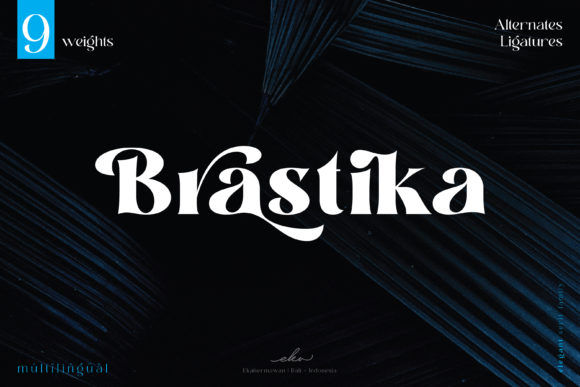
Brastika: The Bold Typography Choice for High-Impact Visual Communication
In the crowded landscape of digital design and print media, capturing attention within the first few seconds is paramount. This is where typography transitions from a functional necessity to a powerful strategic asset. Among the myriad of typefaces available to designers, Brastika stands out as a thick lettered and stylish display font that demands immediate recognition. Expertly designed to make your creation look out of this world, this font will look gorgeous on a variety of ideas, offering a distinct visual voice that bridges the gap between retro nostalgia and modern boldness.
The journey of understanding Brastika begins not with its technical specifications, but with its psychological impact. When a user encounters a headline set in Brastika, they are met with an unapologetic presence. The heavy weight of the strokes creates a sense of authority and stability, while the stylized curves introduce an element of playfulness and creativity. This duality makes it particularly effective for audiences who need to be informed quickly but also entertained. Whether you are a business owner launching a new product, an educator creating engaging course materials, or a hobbyist designing custom merchandise, the utility of such a distinctive typeface extends far beyond simple aesthetics.
The Architecture of Impact: Understanding the Design Philosophy
To truly appreciate the application of Brastika, one must analyze the structural elements that define its character. Unlike standard sans-serif fonts which prioritize neutrality and readability at small sizes, display fonts like Brastika are engineered for scale and presence. The "thick lettered" nature of the typeface ensures that even at smaller dimensions, the glyphs maintain their integrity without losing their defining features. This robust construction allows the font to cut through visual noise effectively.
The stylistic flourishes found in Brastika are not merely decorative; they serve a functional purpose in brand differentiation. In a market saturated with generic geometric sans-serifs, the unique curvature of the 'B', the specific terminal shapes of the 'a' and 'e', and the weight distribution across the x-height create a memorable typographic signature. This signature helps brands establish a unique identity without relying solely on logos or color palettes. For professionals in marketing and branding, leveraging a font with such strong personality can significantly reduce the cognitive load required for a consumer to recognize a brand's visual language.
Why Thick Lettering Matters in Modern Design
The trend toward bold, heavy typography has surged in recent years, driven by the increasing dominance of mobile-first browsing and social media feeds. On small screens, delicate serifs or thin lines often disappear or become illegible. A thick lettered font like Brastika solves this problem inherently. Its substantial stroke width ensures legibility across various devices, from high-resolution desktop monitors to compact smartphone displays.
Beyond mere legibility, the thickness of the letters conveys confidence. In the context of advertising and promotional materials, a bold font suggests that the message is important and worth reading. It commands the eye to pause. For educators and researchers presenting complex data, using Brastika for key findings or section headers can guide the reader's focus to the most critical information, ensuring that the core message is not lost in a sea of text.
Practical Applications Across Diverse Industries
The versatility of Brastika lies in its ability to adapt to different contexts while retaining its core identity. While it is primarily a display font, its characteristics allow it to be used creatively in scenarios ranging from corporate presentations to artistic installations. Let us explore how various sectors are integrating this font into their workflows to achieve specific communication goals.
- Marketing and Advertising: In campaign launches, headlines must stop the scroll. Brastika provides the necessary visual weight to anchor a poster, banner ad, or social media graphic. Its stylish nature adds a touch of sophistication that elevates a standard promotional piece into a statement of quality.
- E-Commerce and Product Packaging: For business owners selling physical goods, packaging is the first physical interaction a customer has with the brand. Using Brastika on labels and boxes can convey durability and premium quality. The font's strong structure mimics the reliability of the product inside, creating a subconscious link between the typography and the item's value.
- Event Planning and Hospitality: Concerts, festivals, and culinary events rely heavily on atmosphere. Brastika fits perfectly into event posters, menu boards, and signage. It evokes a sense of excitement and energy, making it ideal for industries where experience and mood are the primary products being sold.
- Education and Publishing: Teachers and textbook authors often struggle to make dense material approachable. By utilizing Brastika for chapter titles, definitions, or key concepts, educational content becomes more visually engaging. It breaks the monotony of standard body text, signaling to the student that what follows is essential knowledge.
Strategic Implementation and Best Practices
While the potential of Brastika is vast, its effectiveness relies heavily on proper implementation. A common pitfall in typography is overuse. Because the font is so dominant, using it for long paragraphs of body text can lead to visual fatigue and reduced readability. To harness the power of Brastika, designers should adhere to a hierarchy that respects the font's strengths.
- Headline Dominance: Reserve Brastika for headlines, subheads, and pull quotes. Use it to establish the tone of the page immediately.
- Contrast Pairing: Pair Brastika with a clean, neutral sans-serif or a classic serif for body copy. The contrast between the heavy, stylized display font and a lightweight, highly readable body font creates a balanced composition. This juxtaposition highlights the beauty of both typefaces.
- Spacing and Kerning: Due to the thick strokes, tight kerning can cause letters to merge visually. Adequate tracking (letter-spacing) is crucial to ensure each character remains distinct and the overall word shape is preserved.
- Color and Background: The boldness of Brastika pairs well with high-contrast color schemes. However, it also works beautifully in monochromatic designs where the texture of the letters becomes the focal point. Ensure sufficient contrast ratios for accessibility standards.
Navigating Cultural Contexts
When deploying Brastika in international markets or diverse cultural settings, it is important to consider the semantic associations of the font style. The "out of this world" aesthetic mentioned in its design brief often leans towards futuristic or retro-futuristic themes. Depending on the target audience, this might evoke feelings of innovation and progress, or it might feel dated if not handled with care. Professionals working on global campaigns should test the font with representative users to ensure the intended emotional response aligns with the brand message.
The Intersection of Nostalgia and Innovation
One of the most compelling aspects of Brastika is its ability to tap into nostalgia while feeling entirely contemporary. The design language echoes mid-century modernism and the bold graphics of the 1980s, yet it is rendered with the precision of modern vector technology. This blend appeals to a broad demographic, resonating with older generations who appreciate the classic styles and younger audiences who enjoy the vintage revival trends prevalent in current pop culture.
For creators and artists, this dual appeal offers a rich playground for experimentation. A music album cover might use Brastika to evoke the spirit of classic rock, while a tech startup's landing page could use the same font to suggest a retro-modern aesthetic that feels both established and cutting-edge. This flexibility allows the font to transcend specific eras, becoming a timeless tool in the designer's arsenal.
Considerations for Accessibility and Inclusivity
In the pursuit of stylish design, accessibility must never be compromised. While Brastika is excellent for headlines, it is not suitable for all accessibility requirements. Screen readers may interpret the stylized characters differently than standard typefaces, potentially affecting the user experience for those with visual impairments. Therefore, it is vital to ensure that any content presented in Brastika has a corresponding accessible version or that the font is used strictly for non-critical decorative purposes.
Furthermore, the high contrast required for the thick letters to stand out can sometimes clash with low-vision preferences if the background colors are not chosen carefully. Designers must adhere to WCAG guidelines, ensuring that text remains readable for users with varying degrees of vision loss. The goal is to create an experience that is both visually striking and universally accessible.
Future Trends and the Evolution of Display Fonts
As we look toward the future of web and print design, the demand for unique, expressive typography is only expected to grow. With the rise of personalized content and AI-generated imagery, human-designed fonts like Brastika offer a tangible connection to craftsmanship. They provide a level of nuance and intentionality that algorithms often struggle to replicate naturally.
The trend is moving away from uniformity. Brands are seeking ways to differentiate themselves in an increasingly homogenized digital environment. A thick lettered and stylish display font serves as a beacon of individuality. As the industry continues to evolve, the role of such fonts will likely expand, finding new applications in augmented reality interfaces, dynamic web animations, and immersive storytelling experiences.
Conclusion: Elevating Your Creative Vision
Selecting the right typography is one of the most influential decisions a creator can make. It sets the stage for every other element on the page. Brastika, with its expert design and unique character, offers a powerful solution for those looking to make a lasting impression. Whether you are crafting a bold marketing campaign, designing an educational resource, or simply exploring creative expression, this font provides the structural backbone needed to support grand ideas.
By understanding the nuances of its architecture and applying it with strategic intent, professionals and hobbyists alike can unlock the full potential of their projects. It is not just a font; it is a statement. When used correctly, it transforms ordinary content into extraordinary experiences, proving that the right choice in typography can indeed make your creation look out of this world.