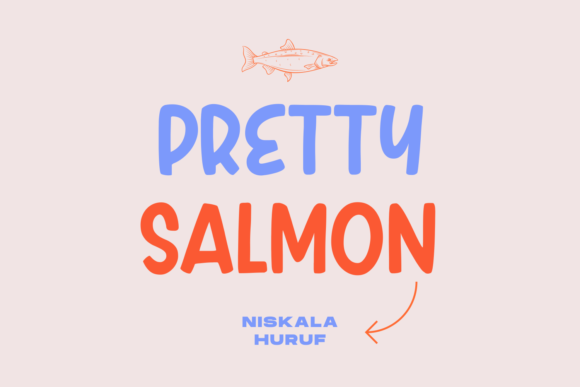
Bridging the Gap Between Digital Precision and Handcrafted Soul with Pretty Salmon
In an era where digital communication is often characterized by sterile uniformity and algorithmic perfection, there is a distinct resurgence of value placed on imperfection. Professionals, creators, and entrepreneurs are increasingly seeking ways to humanize their content, breaking through the noise of standardized interfaces to create genuine connections. This shift has given rise to a renewed appreciation for typography that mimics the tactile nature of traditional media. At the forefront of this movement is Pretty Salmon, a display font designed to bring an authentic, hand-drawn aesthetic to modern design projects.
Pretty Salmon is not merely a typeface; it is a tool for storytelling. As a display font specifically crafted to emulate the look of chalk on a board, it serves as a bridge between the structured world of business and the organic flow of creative thought. Its authentic look and feel add a personal and realistic touch to designs, making it an essential asset for anyone looking to convey warmth, approachability, and educational authority in their work.
The Evolution of Visual Communication in a Digital Age
To understand why a specific font like Pretty Salmon has captured the attention of the design community, one must first examine the broader trends shaping our visual landscape. For the past decade, the design industry has been dominated by minimalism and geometric sans-serifs. While effective for scalability and readability on small screens, this style often results in a homogenized digital experience. Brands struggle to differentiate themselves when every website, app, and presentation slide looks remarkably similar.
However, consumer expectations are evolving. In the post-pandemic world, audiences crave authenticity. They want to see the "human behind the brand." This psychological shift has driven a demand for design elements that suggest effort, care, and a personal touch. The trend toward "analog aesthetics" in digital spaces allows designers to evoke nostalgia and trust without sacrificing the functionality required by modern technology.
This is where Pretty Salmon finds its strategic niche. It addresses the changing needs of marketers and freelancers who need to stand out in crowded marketplaces. By integrating a font that looks like it was written by hand, designers can signal that there is a real person curating the information, fostering a deeper sense of engagement with the audience.
Why Authenticity Matters in Modern Workflows
The relevance of Pretty Salmon extends beyond mere aesthetics; it speaks to the practical requirements of contemporary workflows. Whether you are an educator creating teaching materials, a freelancer designing a pitch deck, or a marketer crafting social media assets, the ability to quickly establish a tone is crucial. Traditional serif fonts often convey formality and tradition, while standard sans-serifs project corporate neutrality. Neither always captures the dynamic, interactive energy required in today's learning and entertainment environments.
When professionals use Pretty Salmon, they are leveraging a visual cue that suggests collaboration and accessibility. The font's unique character set transforms static text into something that feels like a live conversation. This is particularly vital in the education sector, where the goal is to reduce the cognitive load associated with rigid, textbook-style layouts. By using a font that resembles chalk writing, educators can create a classroom atmosphere even within a digital interface, making complex concepts feel more manageable and inviting.
Pretty Salmon: A Tool for Versatile Creative Expression
Pretty Salmon is defined by its ability to serve as a display font for all chalkboard quotes or teaching material. Its design philosophy centers on capturing the nuances of real-world handwriting. Unlike generic "handwritten" fonts that often suffer from uneven spacing or unnatural letterforms, Pretty Salmon maintains a balance between legibility and artistic flair. The strokes vary slightly in thickness, mimicking the pressure applied by a piece of chalk against a rough surface.
This level of detail is what separates a functional font from a transformative one. When used correctly, Pretty Salmon adds a personal and realistic feel to your designs, allowing the content to breathe. It is not just about reading the words; it is about experiencing the medium in which they are presented. This sensory layering is critical for designers who aim to create immersive experiences for their users.
Practical Applications Across Industries
The versatility of Pretty Salmon makes it applicable across a wide spectrum of professional sectors. Let us explore how different groups are utilizing this typeface to meet their specific goals:
- Educators and Instructional Designers: For teachers creating lesson plans, worksheets, or digital courseware, Pretty Salmon offers a way to replicate the familiar chalkboard experience. It helps in presenting definitions, quotes, and key takeaways in a format that students instinctively recognize as educational material, thereby increasing retention and focus.
- Content Creators and Influencers: Social media platforms are visually saturated. To capture attention, creators need distinctive headers and pull quotes. Using Pretty Salmon for chalkboard-style graphics allows influencers to share tips, recipes, or motivational quotes with a vintage, artisanal vibe that stands out against the polished feeds of competitors.
- Entrepreneurs and Startups: In the startup ecosystem, branding is everything. Founders often use Pretty Salmon in pitch decks or landing pages to communicate innovation mixed with a grassroots, scrappy spirit. It suggests a company that values creativity and hard work over corporate gloss.
- Freelance Marketers: Agencies and solo marketers utilize this font to design event signage, workshop posters, and promotional emails. The font's ability to convey a "live" feeling makes it perfect for promoting workshops, seminars, and interactive events where human connection is the primary selling point.
Integrating Pretty Salmon into Your Design Strategy
Implementing a font like Pretty Salmon requires a thoughtful approach to ensure it enhances rather than detracts from the overall message. The key lies in context. Because it is a display font, it is best suited for headlines, subheadings, call-to-action buttons, and short excerpts rather than body copy. Overusing it can lead to visual fatigue, as the intricate details of the letters may become difficult to read at small sizes.
For maximum impact, consider pairing Pretty Salmon with a clean, neutral sans-serif for body text. This contrast creates a visual hierarchy that guides the reader's eye naturally. The bold, textured presence of Pretty Salmon draws attention immediately, while the supporting text ensures clarity and readability. This combination leverages the strengths of both styles, offering the best of both worlds: the emotional resonance of hand-crafted typography and the functional efficiency of modern type.
Furthermore, the integration of such fonts aligns with the growing emphasis on inclusive design. By moving away from rigid, industrial typefaces, designers can create spaces that feel more welcoming to diverse audiences. The slight irregularities in the letterforms of Pretty Salmon mimic the natural variations found in human interaction, subtly reinforcing the idea that the content is created for people, by people.
Future Trends: The Rise of Human-Centric Typography
As we look toward the future of web design and digital marketing, the trajectory points toward greater personalization and emotional intelligence in user interfaces. Artificial intelligence and automation will continue to handle the heavy lifting of data processing and layout generation, but the "soul" of a design will remain a distinctly human endeavor. Fonts like Pretty Salmon represent this human element, providing a canvas for creativity that algorithms cannot easily replicate.
The demand for fonts that offer a realistic, tactile feel is likely to grow as virtual reality and augmented reality technologies mature. In these immersive environments, the texture of text becomes as important as its meaning. A font that simulates the grain of chalk or the stroke of a brush adds depth to the digital experience, making it feel more tangible and real.
Conclusion: Embracing the Personal Touch
In conclusion, the choice of typography is never just a stylistic decision; it is a strategic one that influences how a message is received and interpreted. Pretty Salmon stands out as a powerful solution for professionals who wish to inject personality and realism into their digital communications. Its authentic look and feel allow it to transcend the limitations of standard screen fonts, offering a versatile tool for everything from educational materials to high-stakes marketing campaigns.
By adopting a font that celebrates the imperfect beauty of hand-writing, designers and brands can forge stronger connections with their audiences. In a world increasingly mediated by screens, the simple act of displaying text that looks like it belongs on a chalkboard can be a profound reminder of the human touch. Whether you are teaching a class, pitching a product, or sharing a quote, Pretty Salmon provides the perfect vehicle to deliver your message with clarity, charm, and authenticity.
As you refine your next design project, consider how the right typeface can elevate your narrative. Explore the possibilities of Pretty Salmon and discover how a change in font can transform the entire mood and effectiveness of your work. The future of design is not just about speed and scale; it is about connection, and sometimes, the most powerful connection begins with a single, well-placed word written in chalk.