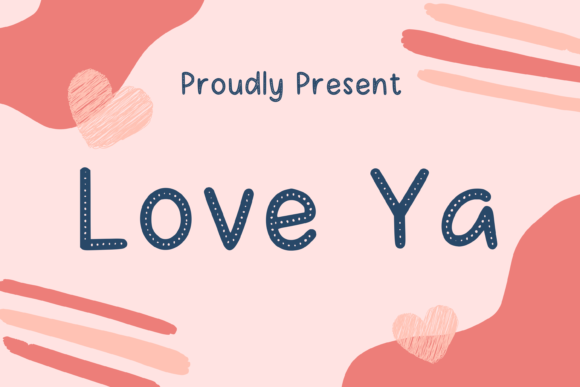
Love Ya: A Practical Look at a Friendly Display Font
In the crowded landscape of digital design, finding a typeface that balances approachability with professional polish is often a challenge. Many designers struggle to find fonts that convey warmth without sacrificing readability or appearing too childish. This is where Love Ya enters the conversation as a distinct option for creatives seeking a curvy, down-to-earth aesthetic. It is not merely another decorative script; it is a display font engineered to make designs look gorgeous while maintaining a clear and friendly presence.
For professionals ranging from small business owners to freelance marketers, typography is rarely just about selecting a style; it is about communicating tone before a single word is read. The specific characteristics of Love Ya suggest it fills a niche for projects requiring genuine connection. By examining its structural qualities and practical applications, we can determine if this font aligns with your workflow and audience goals.
Understanding the Design Philosophy
The core identity of Love Ya lies in its description as a "cute and friendly" display font. However, in professional contexts, these terms require careful interpretation. Cute can easily veer into gimmicky, and friendly can sometimes lack authority. What sets this typeface apart is its emphasis on being readable and down-to-earth. The curves are deliberate rather than erratic, creating a softness that invites engagement rather than overwhelming the viewer.
This font operates on the principle of accessibility. In an era where users scan content rapidly, a typeface that feels welcoming can significantly lower cognitive load. The letterforms appear to have been crafted with a human touch, avoiding the rigid geometry of standard sans-serifs while steering clear of the illegibility often found in complex calligraphy styles. For brands trying to establish a personal relationship with their customers, such as boutique retailers, educational platforms, or lifestyle bloggers, this visual personality is a strategic asset.
The Balance of Curves and Clarity
One of the most critical aspects of any display font is how well it performs at various sizes. Love Ya appears designed to hold up well when scaled for headlines, banners, and social media graphics. The curvature of the letters creates a natural flow that guides the eye across the text. Unlike some novelty fonts that suffer from inconsistent stroke widths or confusing character shapes, Love Ya maintains a consistent weight and rhythm.
This consistency is vital for reliability. When a designer selects a font, they need assurance that it will behave predictably across different mediums. Whether you are printing a brochure or displaying a logo on a mobile screen, the legibility of Love Ya ensures that the message remains clear. The down-to-earth style suggests a lack of pretension, which resonates well with modern audiences who value authenticity over flashiness.
Practical Applications in Professional Workflows
To understand the true value of Love Ya, one must consider where it fits within real-world design scenarios. Its strengths are most apparent in projects that benefit from a warm, inviting atmosphere. Below are several areas where this font demonstrates significant utility.
- Social Media Marketing: For Instagram posts, Facebook ads, or Pinterest pins, attention spans are short. A headline set in Love Ya can stop the scroll by offering a visually pleasant contrast to the typical stark, corporate imagery used by competitors. It adds a layer of personality that encourages sharing and engagement.
- Brand Identity for Small Businesses: Entrepreneurs launching startups in sectors like wellness, crafts, food services, or education often need a logo that feels accessible. Love Ya provides a strong foundation for logotypes that aim to build trust quickly. It avoids the coldness of heavy geometric fonts and the chaos of traditional scripts.
- Editorial and Blogging: Publishers and bloggers looking to humanize their content can use this font for pull quotes, section headers, or feature titles. It breaks up dense blocks of text and signals to the reader that the following content is meant to be enjoyed rather than just consumed.
- Event Materials: Invitations, posters, and signage for workshops, community gatherings, or casual conferences benefit from the friendly nature of this typeface. It sets the right expectation for the event's tone before guests even arrive.
Integration with Other Typefaces
No font exists in a vacuum, and the effectiveness of Love Ya often depends on how it is paired. Because it carries a strong visual personality, it requires a complementary body text that does not compete for attention. Typically, a clean, neutral sans-serif or a simple serif works best to ground the design.
When using Love Ya as a display element, the surrounding text should remain unobtrusive. This allows the "gorgeous" quality of the main title to shine without causing visual clutter. For example, pairing it with a highly legible sans-serif like Helvetica or Open Sans creates a balanced composition where the friendliness of Love Ya is highlighted against the stability of the secondary type. This combination ensures that the design looks professional rather than amateurish.
Evaluating Quality and Long-Term Value
From an objective standpoint, the long-term viability of a font depends on its technical execution and versatility. High-quality fonts offer extensive character sets, including support for multiple languages, special characters, and alternate glyphs. While specific licensing details vary, the general design integrity of Love Ya suggests it is built for durability in commercial projects.
The "down-to-earth" style implies a timeless quality. Trends in design often cycle between minimalism and maximalism, but fonts that prioritize readability and human connection tend to age better than those chasing fleeting fads. If your goal is to create assets that remain effective for years, choosing a font with a solid, classic foundation is essential. Love Ya offers this by focusing on fundamental shape and spacing rather than excessive ornamentation.
However, designers must also recognize potential limitations. As a display font, it is generally not suitable for long-form body copy. Using it for paragraphs of text would likely result in fatigue for the reader due to the high level of detail in the letterforms. Its strength is in impact, not endurance. Understanding this distinction is crucial for maintaining a professional output.
Who Should Consider This Font?
The decision to adopt Love Ya should be driven by specific project needs rather than a desire to follow a trend. It is particularly well-suited for:
- Creatives seeking differentiation: Freelancers and agencies tired of generic templates will find value in a font that immediately distinguishes their work.
- Personal Brand Builders: Individuals building a brand around authenticity, such as coaches, artists, or educators, will find the friendly tone aligns perfectly with their messaging.
- Marketing Teams: Marketers looking to increase emotional resonance in campaigns can leverage the cute and friendly attributes to soften the pitch and connect with consumers on a human level.
Conversely, if your project requires a tone of strict authority, legal precision, or high-tech futurism, Love Ya may not be the appropriate choice. It is important to match the font to the intent of the communication. When used correctly, it enhances the message; when misused, it can undermine credibility.
Making the Final Decision
Selecting the right typography is a nuanced process that involves balancing aesthetics with functionality. Love Ya offers a compelling solution for designers who need to inject warmth and charm into their projects without compromising on clarity. Its curvy, readable, and down-to-earth style makes it a versatile tool for a wide range of applications, from digital marketing materials to print collateral.
For professionals aged 20 to 50 who value both creativity and practicality, evaluating Love Ya is worth the time. Test it in your own workflow. Try it in a mock-up for a client presentation or a new blog header. Observe how it interacts with your existing brand elements. If the result feels authentic and engaging, you have likely found a valuable asset. Ultimately, the best fonts are those that serve the user and the message, and Love Ya appears designed to do exactly that.
By integrating a font with such a distinct yet grounded character, you signal to your audience that you care about the experience of your content. In a world saturated with information, making designs look gorgeous through thoughtful typographic choices is a powerful way to stand out. Love Ya provides the tools to achieve that effect, offering a reliable path to more human-centered design.