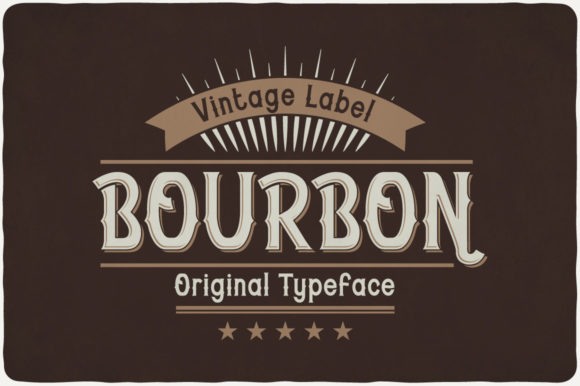
Understanding Bourbon: A Strategic Choice for Vintage-Inspired Design
In the crowded landscape of digital and print typography, selecting the right typeface is rarely about finding a single "best" option. Instead, it is an exercise in alignment—matching the visual voice of a project with its intended emotional impact. Bourbon emerges as a significant contender in this space, specifically designed for those seeking a bold, vintage-inspired aesthetic that refuses to compromise on sophistication. Unlike generic retro fonts that often rely on cliché distortions or low-fidelity textures, Bourbon offers a distinct approach to display typography. It combines imposing weight with refined detailing, creating a tool that can elevate a wide range of creative endeavors.
Defining the Character of Bourbon
To understand where Bourbon fits into a designer's toolkit, one must first look at what makes it distinct. The font is categorized as a display typeface, meaning it is optimized for headlines, posters, and large-format text rather than body copy. Its primary strength lies in its ability to command attention without sacrificing legibility. The design language draws heavily from early 20th-century commercial art, yet it avoids the fatigue often associated with purely historical revivals.
The term "bold" in the context of Bourbon does not merely refer to stroke width; it refers to presence. When set against a background, the letters hold their own, creating a sense of authority and stability. This is achieved through carefully calibrated spacing and unique serifs that provide a touch of elegance. The font is described as sophisticated because it balances the ruggedness of vintage industrial design with a level of polish that feels modern. It is imposing, yes, but it is an imposing quality that invites respect rather than intimidation.
For professionals evaluating their resources, Bourbon represents a specific niche: the intersection of heritage and contemporary relevance. It is not a font for minimalism or corporate neutrality. It is a font for projects that need to tell a story immediately, leveraging the psychological association between vintage aesthetics and established quality.
Comparative Analysis: Bourbon vs. Generic Retro Styles
When researchers compare Bourbon to other options in the vintage category, several key differentiators become apparent. Many fonts marketed as "retro" or "vintage" suffer from overuse. They often feature exaggerated curves, distressed textures, or inconsistent kerning that dates the work quickly. Bourbon avoids these pitfalls by maintaining structural integrity. While it shares the visual DNA of classic serif display fonts, its execution is cleaner and more versatile.
- Structural Consistency: Unlike many alternative vintage styles that prioritize character over readability, Bourbon maintains a high degree of consistency across its glyph set. This ensures that even in complex layouts, the text remains cohesive.
- Versatility in Weight: While primarily a bold face, the internal architecture of Bourbon allows it to function well in various contexts where a heavy hand is required, unlike competitors that may feel too fragile when scaled down or too blocky when scaled up.
- Sophistication Factor: The "imposing" nature of Bourbon is derived from its sharp angles and precise terminals. This sets it apart from softer, script-based vintage fonts that might be perceived as overly casual or nostalgic in a way that lacks gravitas.
This comparison highlights why Bourbon is increasingly viewed as an asset for libraries that require longevity. A font that relies solely on trend-driven distress marks will likely feel outdated within a few years. Bourbon, by focusing on form and proportion, offers a timeless quality that transcends fleeting design fads.
Evaluating Use Cases and Strategic Fit
Deciding whether to incorporate Bourbon into a project requires a clear understanding of the medium and the message. The font is not a universal solution; it excels in specific scenarios where its bold, vintage character aligns with the brand narrative.
Ideal Applications
The most natural home for Bourbon is in branding materials that aim to convey heritage, craftsmanship, or premium quality. Consider a craft brewery looking to highlight the age-old process of fermentation, or a boutique hotel emphasizing historic architecture. In these instances, the font acts as a visual shorthand for reliability and tradition. The imposing nature of the typeface suggests that the product or service behind it is substantial and worth the investment.
Similarly, in editorial design, Bourbon serves as an excellent anchor for magazine covers or feature article headers. It cuts through the noise of competing headlines, drawing the reader's eye immediately. The sophistication of the font ensures that the publication appears authoritative, avoiding the playful or chaotic feel that some vintage alternatives might introduce.
Limited Scenarios
However, the very qualities that make Bourbon powerful also limit its scope. Its boldness and vintage flair make it less suitable for projects requiring subtlety or neutrality. For instance, using Bourbon for a medical app interface or a fintech dashboard would likely create a dissonance between the tone of the typeface and the functional requirements of the platform. In these cases, a clean sans-serif or a neutral humanist typeface would be a far more appropriate choice.
Additionally, while Bourbon is robust, it is still a display font. Attempting to use it for long-form body text is generally inadvisable. The intricate details and heavy strokes can lead to eye strain and reduced reading speed when presented in paragraph form. Designers must recognize this limitation and reserve the font for short bursts of text where its impact can be fully appreciated.
Navigating Tradeoffs and Decision Factors
Selecting a typeface involves weighing tradeoffs. With Bourbon, the primary tradeoff is between stylistic impact and versatility. You gain a font that makes a definitive statement, but you lose the ability to use it in understated contexts. This decision factor should be weighed against the overall design system. If the goal is to create a cohesive brand identity that stands out through personality, Bourbon is a strong candidate. If the goal is to create a flexible system that adapts to numerous sub-brands or varying tones, a more neutral font family might be necessary.
Another consideration is the technical implementation. High-quality display fonts like Bourbon often come with extensive ligatures, alternate characters, and OpenType features that enhance their utility. Evaluators should check the completeness of the font file. Does it include support for extended languages? Are there small caps or specialized numerals? These features can significantly expand the range of applications for the font, making it a better value for the library.
When comparing Bourbon to similar resources, it is also important to consider the cost-benefit ratio. While some free vintage fonts exist, they often lack the refinement and licensing clarity of professional offerings. Investing in a font like Bourbon can save time in the long run by reducing the need for manual adjustments to kerning or spacing, which are common issues with lower-quality alternatives.
Final Thoughts on Integration
The decision to add Bourbon to a collection is ultimately about curating a palette of voices. It is a voice that speaks with confidence, history, and style. It is not the only voice needed in every conversation, but it is an essential one for specific narratives. By understanding its strengths—the boldness, the sophistication, and the imposing nature—and respecting its limitations regarding body text and neutral applications, designers can leverage Bourbon to create work that resonates deeply with audiences.
For those exploring options, the recommendation is to test Bourbon in real-world scenarios before committing. Create mockups for potential projects, such as a logo concept, a poster, or a web banner. Observe how it interacts with other elements in the layout. Does it overpower the imagery, or does it complement it? Does the vintage aesthetic feel authentic to the subject matter, or does it feel forced?
Ultimately, Bourbon is more than just a font; it is a strategic asset. It provides a bridge between the past and the present, allowing creators to tap into the enduring appeal of vintage design while maintaining the precision required for modern communication. Whether used for a bold headline or a subtle accent, it adds a layer of depth that simpler typefaces cannot achieve. As the design industry continues to evolve, having access to tools that balance historical charm with contemporary functionality becomes increasingly valuable, and Bourbon stands firmly in that category.